

2026 Price Guide · Oahu · Updated September 2026
What Does New Flooring Cost in Hawaii?
A straight-answer price guide for Oahu homeowners — real installed costs, what drives them up, and what nobody tells you until the estimate shows up.
The short version
Carpet, installed$5–$28 / sq ft
Vinyl plank & laminate$7–$18 / sq ft
Engineered hardwood$15–$28 / sq ft
Porcelain & tile$14–$50 / sq ft
Whole house, typical$20k–$50k
* Entry grade through premium. Installed = material plus standard installation; floor prep, removal, moisture mitigation and trim are quoted separately.
50+ yearsOn this island since 1974
100% employee-ownedThe person measuring your floor is an owner
20 mil & AC4Our minimum spec on every plank and laminate
Free estimatesItemized, and yours to keep
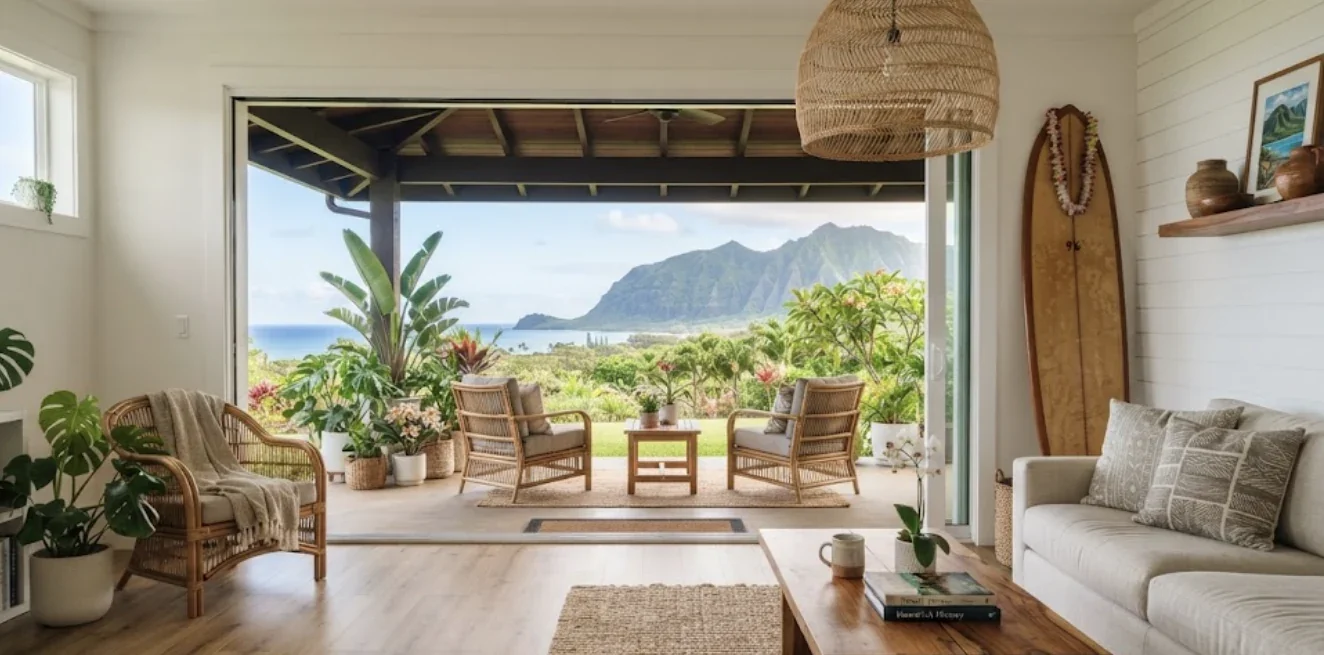
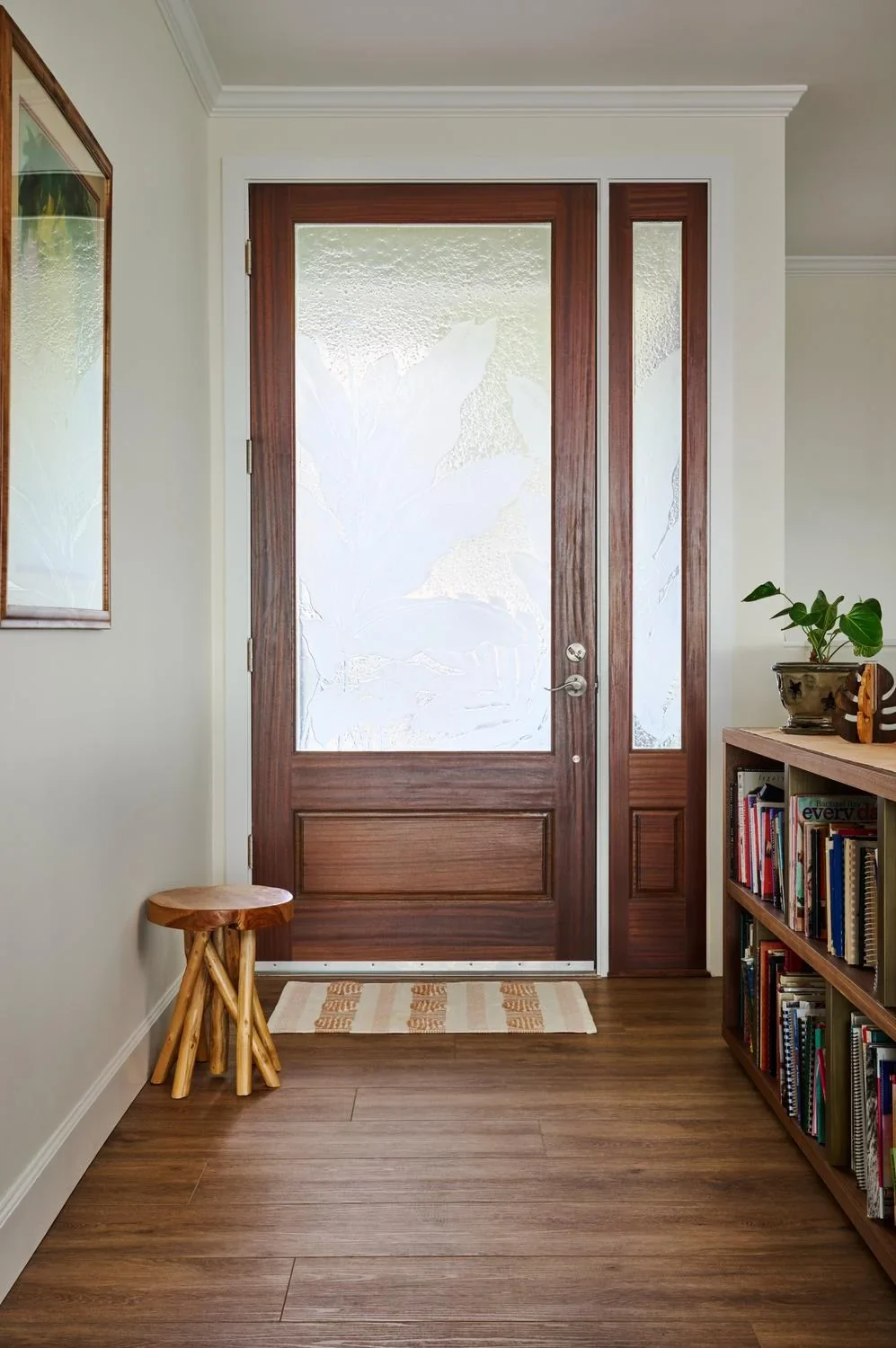
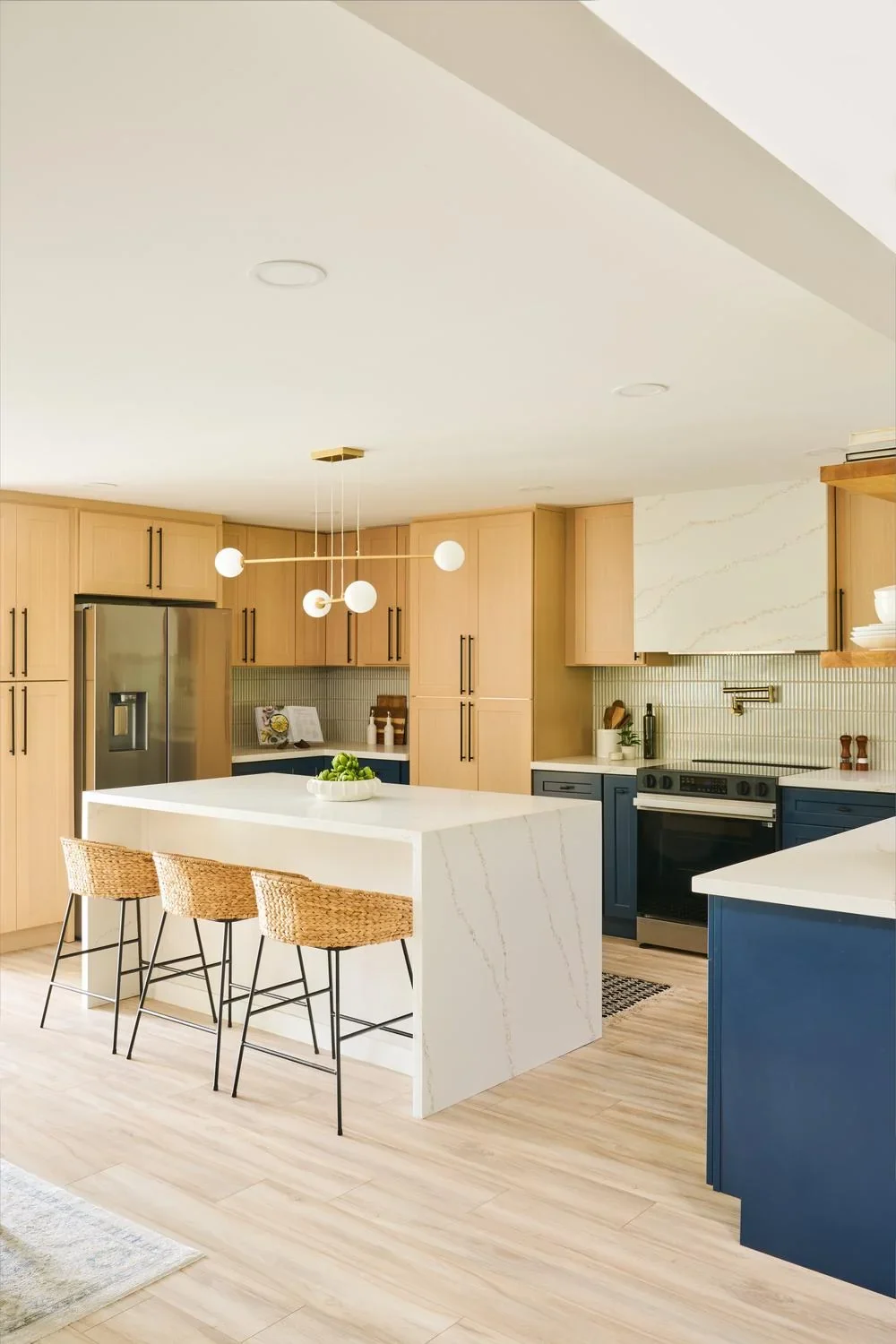
Nobody should have to guess what their floor will cost
Most people replace their floors two or three times in a lifetime. That’s not enough reps to build a gut feel for what’s fair, and there’s no sticker on the side of a floor the way there is on a car.
So homeowners do the reasonable thing — they search. And they find national averages calculated for Ohio, on a slab poured in Ohio, installed by a crew that didn’t have to put anything on a barge.
Hawaii is its own market. Freight, humidity, concrete slabs that move, condo association rules, single-wall construction, jobs that can only be worked between 8 and 4 on weekdays — all of it shows up in the number at the bottom of the estimate. A price guide written for the mainland will be wrong here, and usually wrong low, which is worse than being wrong high because it sets you up for a conversation you didn’t want to have.
We’ve been measuring floors on this island since 1974. This page is what we’ve learned, written down: real installed ranges, the things that move the number, and the costs that catch people off guard. No gates, no email required.
One honest caveat. Every range below is a range for a reason. We cannot price your floor from a web page, and you should be skeptical of anyone who says they can. A firm number comes after someone stands in your house with a laser measure and looks at what’s under the floor you have now.
On this page 1. Installed cost per square foot 2. Materials, labor, and the rest 3. Why two quotes can be thousands apart 4. What drives your price up or down 5. Replacing a whole house 6. Vinyl plank, hardwood, carpet, tile 7. The 8 hidden costs 8. Condo & AOAO sound requirements 9. Asbestos in pre-1985 homes 10. Good, Better, Best 11. Typical Oahu projects 12. What’s included in an estimate 13. Frequently asked questions
The short answer
What new flooring costs on Oahu in 2026
These are installed prices — material plus standard professional installation of your new floor.
| Flooring type | Typical installed * | Premium / upgrade range * |
|---|---|---|
| CarpetTackdown, including pad | $5 – $11 / sq ft | $12 – $28 for wool, patterned, or wide-width |
| Luxury vinyl plank & waterproof laminateLVP / LVT and laminate — same install rate · 20 mil & AC4 minimum | $7 – $13 / sq ft | $13 – $18+ for thicker core, wide plank, or glue-down |
| Sheet vinyl | $6 – $11 / sq ft | — |
| Engineered hardwoodGlue-down — what we recommend in Hawaii | $15 – $21 / sq ft | $21 – $28+ for thicker construction, character grade, or exotics |
| Porcelain & ceramic tile | $14 – $28 / sq ft | $22 – $50 for natural stone, mosaic, or patterned layouts |
* What “installed” covers — and what it doesn’t. Every installed price on this page means material plus standard professional installation of your new floor. It does not include removal and disposal of your existing floor, floor preparation, moisture mitigation, underlayment, baseboard or molding, stair work, door cuts, or furniture moving. Those are real costs on many jobs, and we price every one of them openly in The 8 Hidden Costs below — because a page that quietly folded them in would just be a page that lied to you by $4,000.
Ranges reflect actual Oahu residential projects. Where you land inside a range depends mostly on material selection and how much square footage you’re doing at once. Diagonal and herringbone layouts add roughly $1.50–$2.00 per square foot to installation in every category.
Carpet
specials
$3.99 / sq ftRental & realtor turnovers — carpet, cushion and installation in one price
$799 flatAny carpet job under 360 sq ft — carpet, cushion and installation · condos $899
What a whole project runs
Unlike the table above, these are complete project totals — material, installation, typical removal, prep and trim included.
Across every project size we quoted last quarter, from a single bedroom to a whole house, half landed between roughly $3,200 and $16,000.
| Project scope | Typical total investment |
|---|---|
| One bedroom (120–200 sq ft) | $1,600 – $3,500 |
| Living + dining area (350–500 sq ft) | $4,000 – $9,500 |
| Staircase, carpeted (13–15 treads) | $900 – $2,000 |
| Staircase, hard surface treads & risers | $2,500 – $6,000 |
| Condo or townhome, main living (700–900 sq ft) | $8,000 – $18,000 |
| Single-family main living (1,000–1,400 sq ft) | $12,000 – $26,000 |
| Whole house, every room (1,800–2,400 sq ft) | $20,000 – $50,000 |
Doing a bedroom or two in carpet? Our $799 Room Package covers carpet, cushion and installation for any job under 360 square feet at one flat price.
Want your actual number?
A free in-home measure takes about 45 minutes and ends with a written, itemized estimate. No obligation, no pressure, and you keep the estimate whether you buy from us or not.
Instant ballpark
Estimate your flooring project
Answer a few quick questions and get an instant price range for your project. It’s a ballpark, not a quote — your firm number still comes from a free in-home measure.
Where the money actually goes
People tend to assume the material is the project. It isn’t. On a typical Oahu flooring job, the material you picked out in the showroom is a little under half the invoice.
40–60%MaterialThe flooring itself, plus pad or underlayment, adhesive, trim and transitions.
30–50%Installation laborLayout, cutting, setting, seaming, trim work, cleanup and haul-away.
5–25%Prep & removalTearing out the old floor, grinding and leveling the slab, moisture mitigation.
0–15%Site conditionsCondo protocols, phasing, furniture, stairs, door cuts, toilet pulls.
Prep is the swing variable. On a house where the slab is flat and the old carpet comes up clean, prep is close to nothing. On a 1970s home with three generations of adhesive and a slab that’s a half-inch out over ten feet, prep can be a quarter of the job. Nobody — including us — can tell you which one you have until the old floor is off.
Why Hawaii costs more than the numbers you found online
Freight
Almost every flooring product sold in Hawaii crossed an ocean to get here. Container costs, port fees and inter-island shipping are baked into every square foot. A plank that lists at $2.29 on a mainland site does not arrive here at $2.29.
Concrete
Concrete gives off vapor for its entire life, and in our humidity it gives off more. When a slab reads above a material’s tolerance it needs mitigation first. Skipping it is the most common cause of a floor failing in year two.
Humidity
Solid hardwood moves with moisture. That’s why engineered hardwood outsells solid wood dramatically in Hawaii, and why we recommend it in most homes here.
Access & rules
Condo and high-rise work means elevator reservations, protection of common areas, restricted hours, sound-transmission underlayment, and a certificate of insurance filed weeks in advance.
Why two quotes for the same house can be thousands of dollars apart
This is the question we get most often, and it deserves a real answer rather than a defensive one. Two estimates for the same house can differ by 30% or more and both can be honest. They can also differ by 30% because one of them is hiding something. Here’s how to tell which is which.
Legitimate reasons quotes differ
One quote includes prep and the other doesn’t.
The big one. A quote that assumes your slab is flat will always be lower than one that budgeted to grind, patch and level it. The low quote isn’t wrong yet — it’s just going to become a change order.
Different grades of the same-looking product.
Two vinyl planks can look identical in a showroom and have wear layers of 6 mil and 20 mil; two laminates can look identical and be AC3 and AC4. That’s the difference between a floor that’s tired in five years and one that’s fine in twenty. Ask for the wear layer or the AC rating on anything you’re quoted — we don’t stock below 20 mil or AC4, and not every company can say that.
Removal and disposal.
Pulling up tackdown carpet is cheap. Pulling up glued vinyl, glued hardwood or ceramic tile is labor-intensive. If one quote says “existing floor removed by others,” they aren’t comparable.
Trim, transitions and baseboard.
New floors frequently need new base or quarter round, and doors often need cutting. A quote that leaves this out will be lower and will leave you with a gap at the wall.
Labor rate structure.
Larger jobs carry lower per-square-foot labor because the crew mobilizes once. A flat rate regardless of size is either overcharging small jobs or losing money on big ones.
Reasons to be careful
No written scope.
If the estimate is a number on a business card, there is no scope. There is nothing to hold anyone to.
“Free” installation.
Installation is never free. It’s in the material price, which means you’re paying retail-plus for the product and have no way to compare.
A deposit that’s most of the job.
Material deposits are normal. A demand for 70–80% up front before anything is ordered is not.
No license number, or one that doesn’t match.
Hawaii contractor licenses are searchable through DCCA’s Professional and Vocational Licensing division. Look the company up. It takes ninety seconds.
Nobody measured.
A quote produced from a floor plan or a phone call is a guess. It will change.
How to compare two quotes fairly: Ask both companies for the same four line items broken out separately — material, installation labor, removal and disposal, and floor prep. If one won’t break it out, you’ve learned something.
What drives your price up or down
Seven variables account for most of the spread between a low estimate and a high one. Four of them are yours to control.
| Driver | Pushes cost down | Pushes cost up | You control it? |
|---|---|---|---|
| Square footage | Doing more at once — labor rates step down as the job grows | Small one-room jobs carry minimum charges | YES |
| Material grade | In-stock, standard-width, standard-thickness goods | Special order, wide plank, thicker core, exotic species | YES |
| Layout | Straight lay, running bond | Diagonal, herringbone, borders, inlays, multiple transitions | YES |
| Phasing | One mobilization, house emptied once | Working around a lived-in home in stages | PARTLY |
| Existing floor | Tackdown carpet lifts out fast | Glued-down vinyl, glued hardwood, ceramic tile, natural stone | NO |
| Subfloor condition | Flat, dry, sound slab or plywood | Uneven slab, high moisture readings, soft spots, old adhesive | NO |
| Access | Ground-floor single-family, easy parking | High-rise, elevator scheduling, long carries, restricted hours | NO |
The biggest lever you control
Square footage, and it isn’t close
Installation labor is tiered — the more square footage in one mobilization, the lower the rate. The same vinyl plank installation runs about $6.05 per square foot on a 300-square-foot job and about $5.05 on a 2,500-square-foot job. That’s 17% less labor for doing the work in one pass, and it guarantees a dye-lot match that doing it next year does not.
The biggest lever you don’t control
What’s underneath
Floor preparation on Oahu runs $2.55 to $4.35 per square foot, and moisture mitigation adds another $3.90 to $5.70 over the affected area. On a 1,200-square-foot house that’s the difference between $0 and $10,000 — which is exactly why we won’t give you a firm price over the phone.
What it costs to do a whole house
For a whole-house replacement on Oahu, most homeowners land between $20,000 and $50,000.
Here’s how that breaks down on a real, typical job — a three-bedroom single-family home, existing carpet throughout, standard slab needing basic preparation, new wall base installed.
Same house, different slab
Flat, clean slab — no correction$15,900
Basic prep (shown right)$19,800
Slab tests high — needs mitigation$25,250
This is the spread, and it’s why the measure matters.
1,200 sq ft · luxury vinyl plank over concrete slab
Mid-grade material, carpet removal, basic slab prep, new wall base throughout
| Material — LVP, mid-grade, incl. 10% waste factor | $5,265 |
| Installation labor — locked-in LVP, 1,200 sq ft tier | $6,900 |
| Removal & disposal — tackdown carpet and pad | $780 |
| Floor preparation — basic grind and level | $3,840 |
| Wall base — installation | $2,340 |
| Wall base — material | $345 |
| Bath / kitchen / hallway detail (3 rooms) | $315 |
Project total ≈ $16.50 / sq ft all in $19,800
Note that this total does include removal, prep and trim — the items the per-square-foot table above excludes. That’s the difference between $11.75 a square foot for material and installation and $16.50 a square foot for a finished job.
By material
Luxury vinyl plank & waterproof laminate, installed
LVP is the most-installed floor in Hawaii right now, and the reason is straightforward: it’s waterproof, it handles our humidity without moving, it’s comfortable underfoot, it takes sand and salt without complaint, and the good ones look genuinely like wood.
We install waterproof laminate at the same rate as vinyl plank, which is why they share one price table here. If you’re weighing one against the other, the only thing moving your number is the material — never the labor.
Installed range *
$7 – $13
per sq ft · premium $13–$18+
| Grade | Material | + Installation * | = Installed * | Best for |
|---|---|---|---|---|
| Entry20-mil wear layer · standard thickness, in-stock | $1.99 – $3.49 | $5.05 – $6.45 | $7 – $10 | Rentals, flips, guest rooms, tight budgets |
| Mid MOST POPULAR20 mil+ · thicker core, wider plank, attached pad | $3.50 – $5.99 | $5.05 – $6.45 | $8.50 – $12.50 | Most family homes — the volume seller |
| Premium20 mil+ · thickest core, widest format, enhanced texture | $6.00+ | $5.05 – $6.45 | $11 – $18 | Whole-house, long-term homes, heavy traffic |
* Installation and installed prices cover the new floor only. They do not include removal and disposal of your existing floor, floor preparation, moisture mitigation, underlayment, baseboard or molding, stair work, door cuts, or furniture moving — every one of those is priced in The 8 Hidden Costs. Locked-in (click) installation runs $5.05–$6.85 per square foot depending on job size; glue-down runs $4.20–$6.00. Diagonal layouts add about $1.50 per square foot.
Where our floor starts
We carry the top of each durability scale, and nothing below it
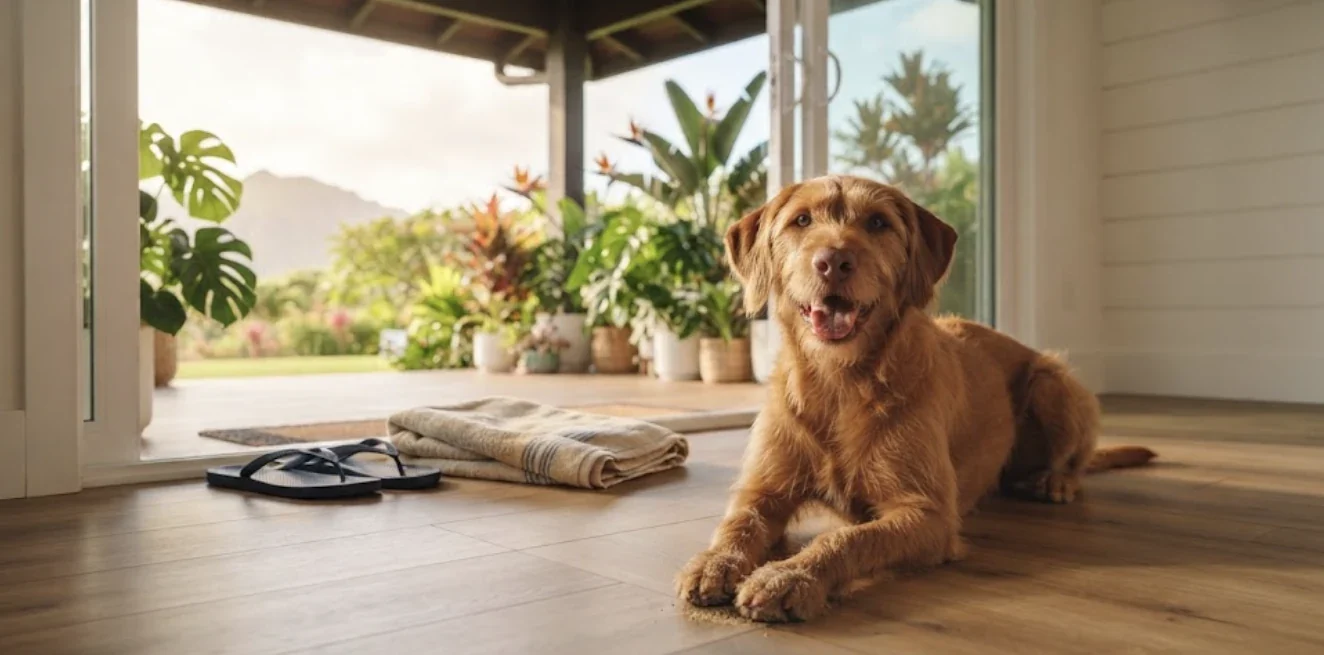
Vinyl plank and laminate are graded on two different scales — mils of wear layer for vinyl, the AC abrasion class for laminate. They are different tests asking the same question: how does this floor look in ten years? Much of the market sells the bottom of both scales, because that’s the spec you quietly downgrade to win a bid. We stopped carrying it.
20 mil
Every vinyl plank we sell
The wear layer is the clear protective film on top, measured in mils. It’s the single best predictor of how a vinyl floor ages, and 20 mil is rated for heavy residential and light commercial use — what a house with kids, dogs and sand actually needs.
6 milLight residential — a guest room, not a hallway
12 milGeneral residential — fine for homes without dogs
20 mil +Heavy residential & light commercialWe start here
AC4
Every laminate we sell
Laminate is graded on the AC scale — Abrasion Class, an independent European standard that tests a floor against wear, impact, staining and burns. AC4 is rated for heavy residential and general commercial traffic, a full step above what most laminate on the market carries.
AC1 – AC2Light residential — bedrooms and closets
AC3General residential — the common retail grade
AC4 +Heavy residential & general commercialWe start here
So what changes between our grades?
Durability rating20 mil on vinyl, AC4 on laminate, across every grade we sell. This one doesn’t change — it’s the floor.
Overall thicknessThe core under the wear surface. Thicker planks sit flatter, feel more solid underfoot, and are more forgiving of minor subfloor variation. This is what drives material cost.
Format & finishPlank width, length, bevel and surface texture. Pure appearance — a wider plank looks more current, and performs the same.
Which means the grade you choose is a decision about feel and looks, not about whether the floor holds up. It holds up either way.
Subfloor flatness matters
Rigid-core planks bridge small dips and then flex over them, which telegraphs into the joints. LVP does not hide a bad slab; it reveals it slowly. Thicker planks are more forgiving, but nothing substitutes for prep.
Moisture still applies
The plank is waterproof. The adhesive, the subfloor and whatever’s under it are not. A waterproof floor over a wet slab still fails.
Direct sun
Large lanai-facing glass on a west wall will fade an underspec’d vinyl. Ask about UV stability before you fall in love with a color.
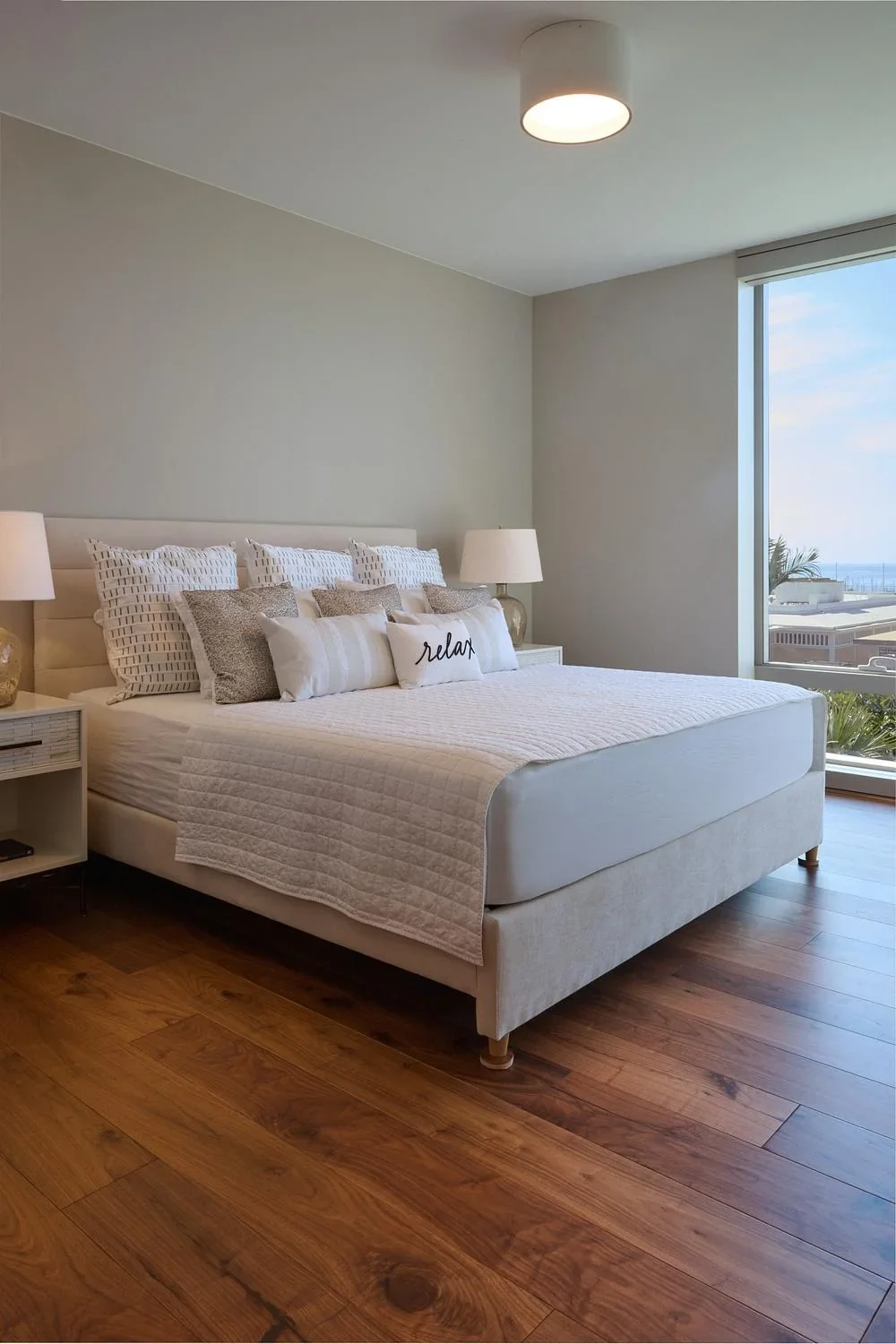
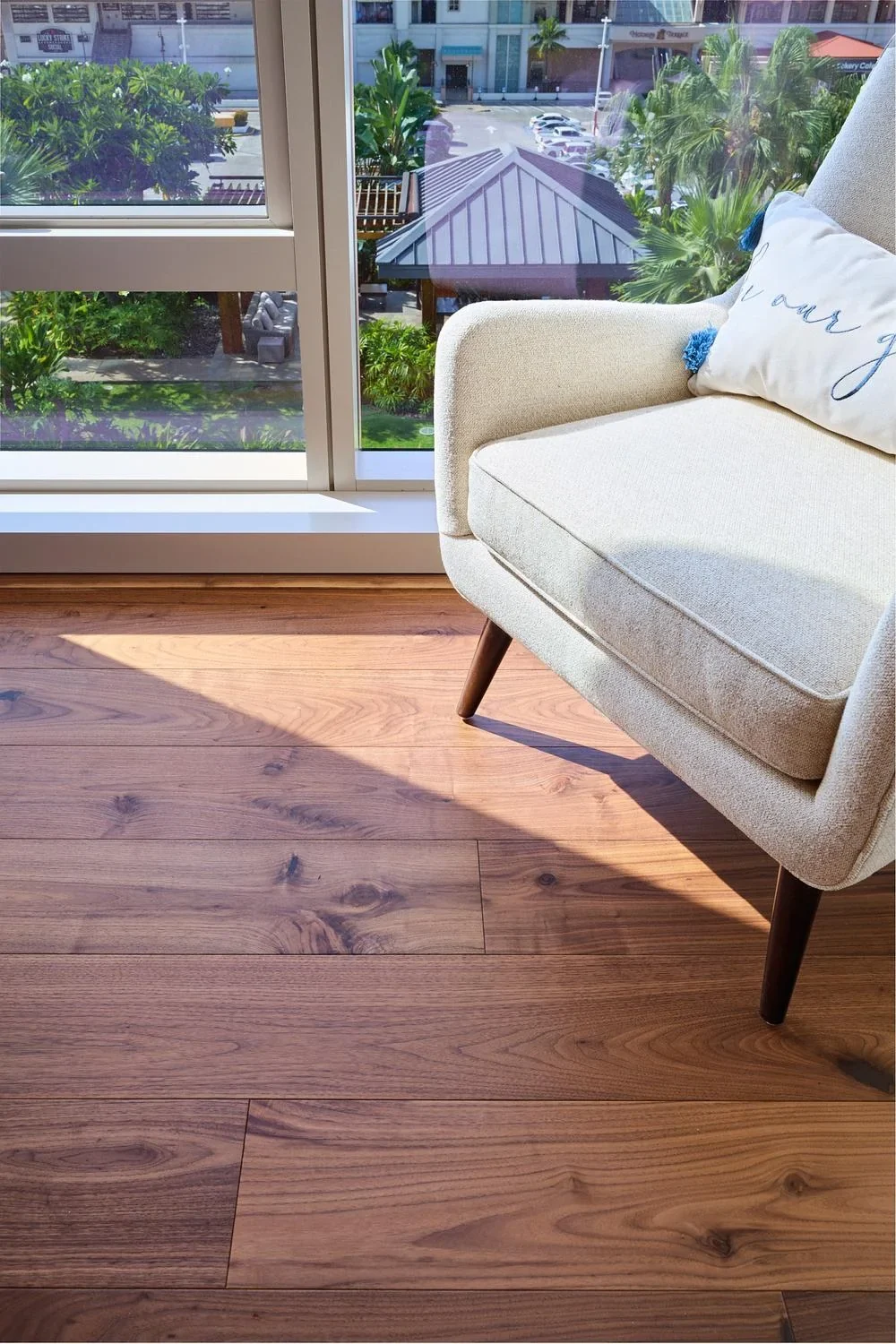
Engineered hardwood, installed
We will almost always recommend engineered hardwood here, and we want to be clear that it isn’t an upsell — engineered is frequently the less expensive option. It’s a recommendation about physics. Solid wood absorbs and releases moisture with the air around it, and in a climate that swings between 55% and 80% relative humidity, solid planks expand, contract, cup and gap.
Installed range *
$15 – $21
per sq ft · premium $21–$28+
| Grade | Material | + Installation * | = Installed * |
|---|---|---|---|
| EntryUp to 7″ wide plank · thinner construction, limited design range | $5.99 – $7.99 | $8.60 – $10.00 | $15 – $18 |
| Mid MOST POPULARThicker construction · broader color, texture and finish range | $8.00 – $11.00 | $8.60 – $10.00 | $17 – $21 |
| PremiumThickest construction · widest formats, character grade, exotics | $12.00+ | $8.60 – $10.00 | $21 – $28+ |
* Installation and installed prices cover the new floor only. They do not include removal and disposal of your existing floor, floor preparation, moisture mitigation, baseboard or molding, stair work, door cuts, or furniture moving — see The 8 Hidden Costs. Figures are for glue-down over prepared slab, the standard method in Hawaii. Adhesive is quoted separately. Diagonal layouts add about $1.55 per square foot.
Width is not the quality signal
You can get a 7-inch plank in our entry line. What a wide entry-grade plank doesn’t give you is the thicker construction underneath it or the range of finishes above it. So don’t shop wood by width — ask about the build.
Thicker build, more refinishes
A thinner wear layer can be refinished once, carefully. A thicker one, two or three times. If you’re planning to be in the house twenty years, that math favors moving up a grade.
Adhesive is a real line item
Often $0.75–$1.25 per square foot on glue-down wood, and the moisture-barrier adhesives we specify in Hawaii are at the higher end. Worth the money.
Carpet, installed
Carpet is still the best answer for bedrooms, stairs, and any room where quiet matters — and it’s the most cost-effective way to change how a room feels.
Installed range *
$5 – $11
per sq ft, with pad · wool $12–$28
| Grade | Carpet | + Pad | + Installation * | = Installed * |
|---|---|---|---|---|
| Builder / rental | $1.50 – $2.00 | $0.65 – $0.90 | $2.40 – $2.70 | $5 – $6 |
| Mid-grade residential | $2.25 – $3.50 | $1.00 – $1.50 | $2.40 – $2.70 | $6 – $8 |
| PremiumSoft solution-dyed, textured, patterned | $4.00 – $6.00 | $1.50 – $2.00 | $2.40 – $2.70 | $8 – $11 |
| LuxuryWool, custom pattern, wide width | $8.00 – $23.00 | $2.00+ | $2.70+ | $12 – $28 |
* Installation and installed prices cover the new carpet only — not removal of your existing floor, floor preparation, stairs, or furniture moving. See The 8 Hidden Costs. Glue-down carpet, common in condos and commercial settings, runs about $3.16 per square foot to install. Carpet on stairs is quoted by the tread, not by the square foot.
Two ways to pay less for carpet
Carpet is the one category where we run standing programs rather than one-off sales. If you fit either of these, take it — both price out below our own table above.
Rental & Realtor Program
$3.99 / sq ft
Carpet, cushion and installation in one price. Built for tenant turnovers, property managers, and getting a listing photo-ready on a deadline — the jobs where speed and a predictable number matter more than a hundred color options.
Select in-stock carpet and cushion. Ask for the program by name.
The Room Package
$799 flat
Any carpet job under 360 square feet — carpet, cushion and installation, one price, no math. That’s most bedrooms, offices and small living rooms covered for a number you know before we arrive.
Condominiums $899, which covers the added building protocol. Select in-stock carpet and cushion.
Both programs cover carpet, cushion and installation. Floor preparation, removal and disposal of existing flooring, stairs, and furniture moving are quoted separately. Promotional pricing, current as of October 2026 and subject to change.
Don’t cheap out on the pad
It’s the least visible part of the project and it determines how long the carpet lasts. A $0.65 pad under a $4.00 carpet is a false economy that shows up as matting in the traffic lanes in about three years. Spend the extra $0.50 a square foot — it is the highest-return dollar in the entire category.
Fiber, briefly
Solution-dyed nylon or polyester — color goes all the way through the fiber, so it doesn’t bleach. Our default recommendation in this much sun.
Polyester (PET) — softest per dollar, excellent stain resistance, less resilient over time. Great in bedrooms, less so in a hallway.
Wool — the best there is, and priced accordingly. Naturally flame-resistant, remarkable longevity, feels like nothing else.
Tile, installed
Tile is the widest range on this page, and the reason is that tile is the least forgiving material there is. The floor under it has to be dead flat and it has to stay still. Getting it there is where the money goes.
Installed range *
$14 – $28
per sq ft · stone & decorative $22–$50
| Type | Material | Installed range * |
|---|---|---|
| Ceramic, standard format | $2.00 – $4.00 | $14 – $18 |
| Porcelain, standard format12×24 and similar | $3.00 – $6.00 | $16 – $22 |
| Porcelain, large format24×48, 32×32 and up | $5.00 – $9.00 | $20 – $28 |
| Natural stoneMarble, travertine, limestone | $6.00 – $26.00 | $22 – $45 |
| Mosaic, patterned, decorative | Varies widely | $25 – $50 |
* Installed covers material plus setting the new tile only. It does not include demolition and disposal of your existing floor, substrate leveling, waterproof membrane, crack isolation, baseboard, or toilet removal and reset — those are priced in The 8 Hidden Costs, and on a tile job they are often the larger half of the invoice.
Flatness tolerance
Large-format tile needs the substrate flat within about 1/8″ over 10 feet. Most slabs are not. Getting there means self-leveling compound before a single tile is set.
Waterproofing
Any wet area needs a waterproof membrane; any slab that might move needs crack isolation. Both are real materials with real labor, and both are non-optional in a bathroom.
Setting is slow
Large-format and natural stone require back-buttering, leveling clips and careful layout. Skilled, unhurried work.
Removal is brutal
Replacing existing tile? Budget $6.30–$6.50 per square foot to demo ceramic and $9.15–$9.35 for natural stone — often the largest surprise on a tile job.
For condo, townhome and high-rise owners
Check your AOAO sound requirements before you shop
This is the most common reason a condo flooring project goes sideways, and it has nothing to do with the floor you picked. Nearly every association on Oahu has rules about what can go over a concrete deck with a neighbor underneath, and those rules are written in a spec most homeowners have never heard of until the application comes back rejected.
The two ratings your house rules will name
IIC — Impact Insulation Class.
How well the floor assembly blocks impact noise: footsteps, dropped keys, a chair sliding back. This is the one that generates complaints from the unit below, and the one most associations regulate.
STC — Sound Transmission Class.
How well it blocks airborne noise: conversation, television, music. Less often specified for flooring, but plenty of buildings list both.
Higher is better on both scales. What your building asks for varies — some name a minimum rating, some name approved underlayment products by brand, some want a tested assembly and a copy of the test report attached to your application. Carpet usually passes without any of it. Hard surface almost never passes on its own.
Six questions to ask before you fall in love with a floor
- Does the building allow hard-surface flooring in your unit at all — and on your floor?
- What minimum IIC does it require? Is an STC minimum listed too?
- Does it name specific approved underlayment products, or accept any assembly that meets the rating?
- Do you need to submit an application, a test report, or a contractor certificate of insurance before work can start — and how long does approval take?
- What are the permitted work hours, elevator rules, and common-area protection requirements?
- Is there a deposit or fee the association holds during the work?
What it does to your number. Acoustic underlayment runs $2.95 to $8.60 per square foot depending on the system your building requires, and some assemblies also need additional floor preparation underneath to perform as tested. On an 800-square-foot condo, that’s roughly $2,400 to $6,900 on top of the floor itself — enough to change which floor you choose. Which is exactly why you want this answer before you shop, not after.
We have a compliant solution for every building we’ve worked in
Over 50 years on this island means we have installed in most of the condominiums on it, and we carry sound underlayment systems that meet what those buildings ask for. Bring us your house rules or your renovation application and we’ll tell you what qualifies, what it costs, and what paperwork your AOAO will want before a single plank comes off the truck.
For homes built before 1985
Asbestos: the one that can change the whole number
Most Hawaii homes built before 1985 contain asbestos somewhere, and flooring is one of the most common places it sits. If that’s your house, this is the single largest cost swing on this page — larger than the floor you choose, larger than the prep, larger than anything in the hidden-costs list above. We would rather you hear it here than on the second day of demolition.
Where it hides in a floor
9×9 vinyl floor tile — the classic. If you have small square tiles under something newer, assume it until tested.
Sheet vinyl backing — the felt-like layer bonded to the underside.
Black mastic or cutback adhesive — the dark, tarry glue left on the slab after an old floor comes up.
Buried layers — it is common here to find two or three floors stacked on each other, with the oldest one at the bottom.
What abatement adds
$8 – $15
per square foot, on top of normal removal
On 1,000 square feet that is $8,000 to $15,000 added to the project — which is why we will not quote a pre-1985 home as though the slab is clean, and why an estimate from someone who did should worry you.
Abatement is performed by a licensed abatement contractor, not by a flooring crew. We coordinate it; we do not self-perform it.
Intact is not the emergency. Disturbing it is. Asbestos flooring that is sealed under another floor and left alone is generally not releasing fibers. Grinding, sanding, scraping or breaking it up is what puts them in the air — which is exactly what a normal floor-prep crew does on a normal day. So “we’ll just sand it down” is not a money-saving suggestion. It is the wrong answer, and on a pre-1985 home it is the reason to stop and test first.
1. Test before you demo
A lab sample is inexpensive and fast relative to what it prevents. If your home predates 1985 and nobody has tested, testing is step one — before a quote means anything.
2. Abate, or encapsulate
Removal by a licensed contractor is one path. Depending on the material and your new floor, leaving it undisturbed and installing over a barrier is sometimes the better and far cheaper one. We will tell you honestly which applies.
3. Then we install
Once the substrate is cleared and documented, your project proceeds like any other — prep, moisture testing, installation, walkthrough.
Every one of these is on our written estimate before you sign.
We’d rather have the uncomfortable conversation on day one than on day fourteen.
Good, Better, Best — how to think about your budget
Most homeowners don’t need the most expensive floor. They need the right floor for how long they’re staying and how hard the room gets used. These project totals are complete — removal, prep and trim included.
Good
$7 – $10
per sq ft installed *
1,200 sq ft home, complete
$10,000 – $15,000
Material — In-stock, proven performers, standard widths
LVP spec — 20-mil wear layer, standard thickness
Prep — Correct what’s needed for the floor to perform
Trim — Reuse base where possible, quarter round at walls
Best for: Rentals, flips, short holds, tight budgets
BetterMost land here
$10 – $15
per sq ft installed *
1,200 sq ft home, complete
$14,000 – $22,000
Material — Wider planks, thicker core, better texture and visuals
LVP spec — 20 mil+, thicker core, attached pad
Prep — Correct to full flatness spec
Trim — New wall base throughout
Best for: Family homes, 10+ year holds
Best
$15 – $28
per sq ft installed *
1,200 sq ft home, complete
$22,000 – $38,000
Material — Engineered hardwood, large-format porcelain, wool
LVP spec — 20 mil+, thickest core, widest format
Prep — Full flatness spec plus moisture system regardless of reading
Trim — New base, custom profiles, painted and finished
Best for: Forever homes, high-traffic households, resale renovations
Good is not “cheap.” Everything we sell at every tier is a product we’ll warranty and install with the same crews — and every vinyl plank at every tier carries a 20-mil wear layer or better. The difference is longevity, acoustics, feel underfoot, and how the floor looks in year ten.
Where we’d tell you to spend
The pad under your carpet, moisture mitigation if the slab tests high, and the installation itself. These determine whether the floor is still good in a decade. You don’t have to spend up for a wear layer here — we already did that for you.
Where we’d tell you to save
Width and visual drama. A 5″ plank and a 9″ plank in the same collection wear the same. The 9″ looks more current and costs meaningfully more. That’s a taste decision, not a performance one — and it’s completely fine to make it either way.
Typical scopes, real numbers
Typical Oahu projects and what they cost
Complete project costs — material, installation, removal, prep and trim.
Kailua single-family, LVP throughout
1,340 sq ft · carpet and sheet vinyl removed · basic slab prep · premium-grade luxury vinyl plank in living, dining, hall and three bedrooms · new wall base throughout
Investment range$20,000 – $25,000
Honolulu high-rise condo
780 sq ft · existing carpet removed · acoustic underlayment to meet association IIC requirement · rigid-core LVP · condo protocol, elevator scheduling and common-area protection
Investment range$13,000 – $18,000
Mililani family home, carpet and vinyl mix
1,150 sq ft · LVP in living, dining, kitchen and hallway · premium carpet with upgraded pad in four bedrooms · new base throughout · furniture moved by AFH
Investment range$15,000 – $20,000
Kaneohe home, engineered hardwood
950 sq ft · glued-down engineered oak, 7″ plank, moisture-barrier adhesive · full slab preparation to flatness spec · stair treads wrapped to match · new base and shoe
Investment range$22,000 – $28,000
Pearl City bathroom and kitchen tile
Two bathrooms and kitchen · existing ceramic demolished and hauled · waterproof membrane and crack isolation · large-format porcelain · toilets pulled and reset
Investment range$14,000 – $19,000
Ewa Beach rental turnover
1,050 sq ft · carpet removed · entry-grade LVP throughout · quarter round at walls · completed in six working days between tenants
Investment range$10,000 – $14,000
Ranges reflect what these scopes typically cost on Oahu. Your project will be priced from your measure, your material selection, and your slab.
What’s included in an American Floor & Home estimate
Included
In-home measure by a trained estimator, at no cost
Written, itemized estimate — material, labor, removal and prep broken out separately
Material and quantity takeoff with appropriate waste factor
Professional installation by our own vetted crews
Removal and disposal of your old flooring, when quoted
Slab moisture testing before any glue-down or floating installation
Standard furniture moving as quoted
Cleanup and haul-away of all job debris
Manufacturer material warranty plus our installation warranty
One point of contact from measure through final walkthrough
Not included unless separately quoted
Subfloor structural repair discovered after demolition
Moisture mitigation, if the slab tests above manufacturer tolerance
Asbestos or lead-containing material abatement (pre-1985 homes — requires a licensed abatement contractor)
Plumbing, electrical, or HVAC modification
Painting beyond wall base
Appliance disconnection and reconnection
Association fees, permits, or certificates of insurance charged by your building
Moving pianos, safes, aquariums, or similar specialty items
How our process works
- Visit a showroom or book a shop-at-home. Our showroom is on Sand Island Access Road in Honolulu. If you’d rather not drive, we’ll bring samples to your house — seeing flooring in your own light is genuinely different from seeing it under showroom lights.
- See it in your room first. Our Roomvo visualizer lets you drop any floor we carry into a photo of your actual room before you commit.
- Free in-home measure. About 45 minutes. We measure, check the subfloor, test slab moisture where relevant, and note anything that will affect the install.
- Written estimate. Itemized, with removal and prep broken out separately so you can compare it to anything else you’ve been given.
- Installation. Scheduled around you. Our crews, not a rotating cast of subs.
- Walkthrough. We don’t consider a job finished until you’ve walked it with us.
Frequently asked questions
The questions our estimators get asked most often, answered the same way we’d answer them at your kitchen table.
How much does flooring cost per square foot in Hawaii?
Installed flooring on Oahu typically runs $5 to $28 per square foot for carpet, $7 to $18 for luxury vinyl plank and waterproof laminate, $15 to $28 for engineered hardwood, and $14 to $50 for tile, entry grade through premium. These figures cover material plus standard installation of the new floor. Removal of your old floor, floor preparation, moisture mitigation, underlayment and new baseboard are quoted separately, because not every project needs them.
Do you have any flooring specials or package pricing?
We run two standing carpet programs. Our Rental & Realtor Program is $3.99 per square foot for carpet, cushion and installation together, built for tenant turnovers and listing prep. Our Room Package covers any carpet job under 360 square feet — carpet, cushion and installation — for a flat $799, or $899 in a condominium, which covers the added building protocol. Both use select in-stock carpet and cushion, and both exclude floor preparation, removal of existing flooring, stairs and furniture moving.
Why is flooring more expensive in Hawaii than on the mainland?
Four reasons: nearly all flooring material ships across an ocean, which adds freight to every square foot; many Oahu homes sit on concrete slabs that require moisture testing and often mitigation; our humidity rules out some materials and demands better-grade versions of others; and condo, high-rise, and restricted-access work adds real labor. Expect Hawaii installed pricing to run meaningfully above national averages.
How much does it cost to replace all the flooring in a house on Oahu?
Most whole-house flooring replacements on Oahu fall between $20,000 and $50,000, depending on square footage, material grade, and how much floor preparation the subfloor needs. A 1,200-square-foot home in mid-grade luxury vinyl plank, including carpet removal, basic slab prep, and new wall base, typically runs around $19,800 — about $16.50 per square foot for a finished job.
What wear layer should I look for in vinyl plank flooring?
At least 20 mil. The wear layer is the clear protective film on top, and it is the best single predictor of how the floor looks in ten years. Much of the market sells 6-mil and 12-mil goods, which are fine in a guest room and wrong in a hallway. We stopped carrying anything under 20 mil, so every vinyl plank in our showrooms is rated for heavy residential and light commercial use. What changes between our grades is overall plank thickness and format, not durability.
What AC rating should laminate flooring have?
AC4 or higher for a family home. AC stands for Abrasion Class, an independent European standard that tests laminate against wear, impact, staining and burns on a scale from AC1 to AC6. AC1 and AC2 are light residential, AC3 is the common retail grade, and AC4 is rated for heavy residential and general commercial traffic. Every laminate we carry is AC4 or better, which is the laminate equivalent of the 20-mil minimum we hold on vinyl plank.
Is luxury vinyl plank a good choice for Hawaii homes?
Yes — it’s the most-installed residential floor in Hawaii for good reason. LVP is waterproof, dimensionally stable in high humidity, comfortable underfoot, and handles sand and salt well. Ask what the wear layer is on anything you’re quoted elsewhere; every plank we carry is 20 mil or better.
Should I install solid hardwood or engineered hardwood in Hawaii?
Engineered hardwood is the better choice in nearly every Hawaii home. Solid wood expands and contracts with humidity, which in our climate leads to cupping and gapping. Engineered hardwood has a real hardwood wear layer over a dimensionally stable core, giving you the same wood surface with far less seasonal movement — often at a lower installed cost.
What is moisture mitigation and do I need it?
Moisture mitigation is a system applied to a concrete slab to block vapor from reaching the flooring above it. You need it when your slab tests above the flooring manufacturer’s moisture tolerance, which is common in Hawaii. It runs about $3.90 to $5.70 per square foot. Installing over a slab that tests high voids the material warranty and typically causes the floor to fail within two to three years.
My condo requires a sound rating — what does that mean for my flooring?
Most Oahu associations regulate hard-surface flooring through an IIC rating (Impact Insulation Class, which measures footstep and impact noise reaching the unit below) and sometimes an STC rating (Sound Transmission Class, for airborne noise). Requirements vary by building: some name a minimum rating, some name approved underlayment products, and some require a tested assembly plus a copy of the test report with your renovation application. Meeting the requirement usually means an acoustic underlayment at $2.95 to $8.60 per square foot, and occasionally added floor preparation underneath it. Check your house rules before you shop, because the answer can change which floor makes sense. We carry compliant systems for the buildings we work in — bring us your house rules and we will tell you what qualifies.
Does my Hawaii home have asbestos under the floor?
If it was built before 1985, quite possibly. Asbestos shows up most often in 9×9 vinyl floor tile, in the felt backing of old sheet vinyl, and in the black mastic or cutback adhesive left on a slab. Material that is intact and undisturbed is generally not releasing fibers — it is grinding, sanding, scraping or breaking it up that does, which is exactly what ordinary floor preparation involves. So on a pre-1985 home, testing comes before demolition. If abatement is needed, it runs roughly $8 to $15 per square foot on top of normal removal and must be performed by a licensed abatement contractor; in some cases leaving the material undisturbed and installing over a barrier is the better and far cheaper path.
How much does it cost to remove old flooring?
Removal ranges from about $0.65 per square foot for tackdown carpet to roughly $9.35 per square foot for natural stone. Glued-down vinyl runs about $4.40 to $4.60, and ceramic tile or glued hardwood runs about $6.30 to $6.50 per square foot. This is one of the largest sources of difference between two quotes on the same house.
Why are two flooring quotes for my house thousands of dollars apart?
Most often because one includes floor preparation and removal and the other doesn’t, or because the two quotes are for different grades of similar-looking material. Ask both companies to break out material, installation labor, removal, and floor prep as separate line items, and ask what the wear layer is on any vinyl plank quoted. If one won’t answer, that tells you something.
Do you charge for an estimate?
No. In-home measures and written estimates are free, with no obligation, and the estimate is yours to keep and compare regardless of whether you buy from us.
How long does a flooring installation take?
A single room is usually one day. A 1,200-square-foot home in vinyl plank is typically three to five working days. Tile takes longer because of curing time, and any job requiring floor preparation or moisture mitigation adds a day or more for those systems to cure before flooring goes down.

Over 50 years on this island. Let’s talk about your floor.
American Floor & Home has been helping Hawaii families choose floors since 1974, and we’re 100% employee-owned — which means the person who measures your house has a stake in how your job turns out.
Come see and feel the material in our showroom, or let us bring the showroom to you.